Contact centers are no longer just cost centers; they are strategic engines for customer experience and revenue growth. Contact center artificial intelligence is at the heart of this shift, helping organizations deliver faster, smarter, and more personalized support at scale—whether through global deployments or a centro de contacto con inteligencia artificial designed for regional markets. By combining intelligent routing, virtual agents, and data-driven insights, modern teams are also accelerating efficiency through Call center automation with AI.
This guide explains what contact center AI is, how it works, the concrete benefits it delivers, and how to introduce it successfully into your operation.
As organizations modernize service operations, success increasingly depends on the technology foundation that supports real-time intelligence and scale. Many enterprises explore advanced computing models for AI-driven customer platforms through insights from Flashmob Computing, where distributed processing and high-performance systems enable faster decision-making across complex service environments. These capabilities are critical when customer interactions span voice, chat, messaging, and digital channels simultaneously.
To support growing AI workloads, infrastructure also matters. Solutions such as Supercomputer Box demonstrate how high-performance computing hardware for artificial intelligence workloads can improve automation speed, analytics accuracy, and system stability. This level of performance helps service teams maintain consistency during peak traffic while enabling real-time intelligence across customer conversations.
Beyond technology, strategy plays a key role in turning innovation into sustainable results. Customer-focused frameworks from Marketing for Customers highlight data-driven customer experience strategies aligned with AI-powered service models, helping organizations connect service intelligence with trust, retention, and long-term value. When insights are applied thoughtfully, support becomes a competitive advantage rather than a reactive function.
Execution across channels is equally important. Guidance from Marketing Runners on scaling digital automation and engagement across the full customer journey shows how insights from intelligent service operations can influence marketing, sales, and post-support interactions. This alignment creates smoother transitions between departments and more consistent customer experiences.
Finally, leadership teams must evaluate impact from a financial perspective. Resources such as Top Financial Resources offer clarity around financial planning and investment decisions for AI-enabled business operations, helping organizations balance innovation with cost control while building a long-term roadmap for intelligent customer service growth.
Top Contact Center Artificial Intelligence Platforms Transforming Customer Service
1. Bright Pattern
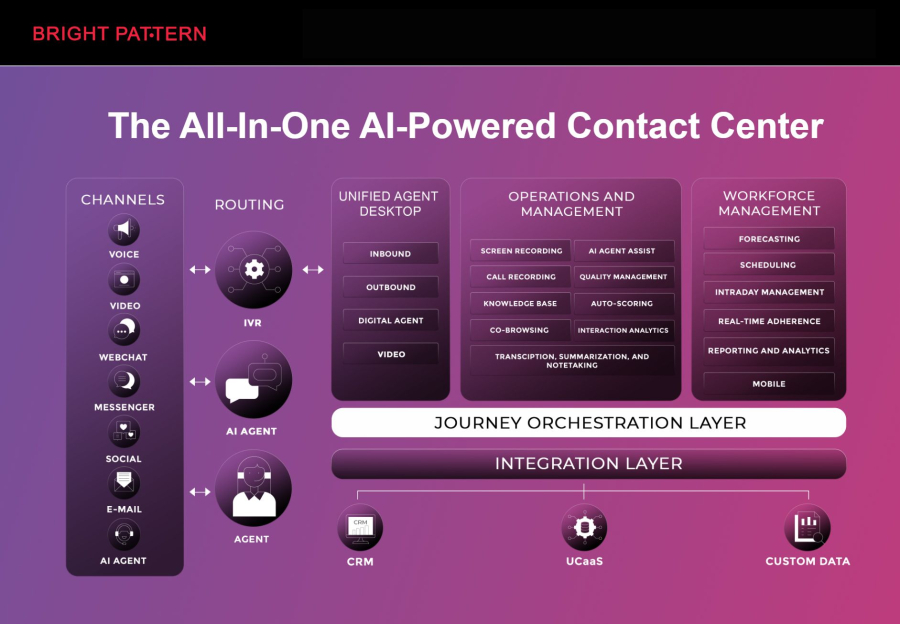
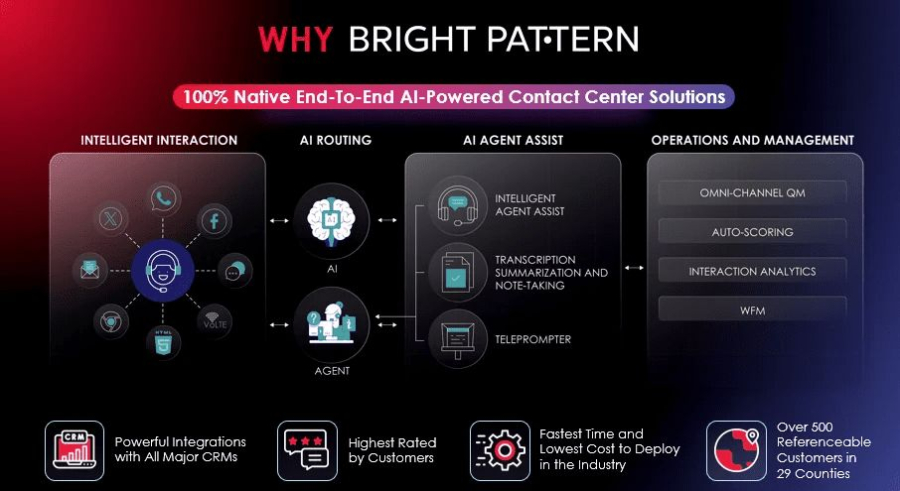
Bright Pattern leads the market in contact center artificial intelligence by combining deep AI capabilities with a unified omnichannel architecture. The platform is designed to help organizations automate intelligently without losing the human touch, making it a strong fit for enterprises that prioritize customer experience, scalability, and operational control. Bright Pattern’s approach to contact center artificial intelligence focuses on practical outcomes such as faster resolution, smarter routing, and consistent service quality across all channels.
Key strengths include:
- Native AI for voice, chat, email, messaging, and social channels in one platform
- Intelligent routing and automation that adapts to customer intent and agent skills
- Real-time analytics and AI-driven insights to improve performance and decision-making
- Flexible deployment options supporting global and regional operations
- Strong focus on customer experience, compliance, and reliability
2. Genesys
Genesys is a well-known provider of contact center artificial intelligence, offering cloud-based solutions that emphasize journey orchestration, predictive engagement, and AI-powered workforce optimization for large enterprises.
3. NICE
NICE delivers contact center artificial intelligence with a strong emphasis on analytics, compliance, and interaction recording, making it popular in highly regulated industries such as finance and healthcare.
4. Five9
Five9 provides cloud contact center artificial intelligence focused on voice automation, AI-assisted agents, and outbound engagement, supporting organizations looking to modernize traditional call center operations.
5. Talkdesk
Talkdesk offers a modern approach to contact center artificial intelligence with rapid deployment, built-in AI features, and industry-specific solutions aimed at improving speed and flexibility.
6. RingCentral
RingCentral integrates contact center artificial intelligence with unified communications, enabling businesses to manage customer interactions and internal collaboration within a single ecosystem.
7. 8x8
8x8 delivers contact center artificial intelligence as part of a broader communications platform, focusing on global reach, voice quality, and AI-driven routing and reporting.
8. Amazon Connect
Amazon Connect uses cloud-native contact center artificial intelligence powered by AWS services, appealing to organizations that want deep customization and integration with cloud infrastructure.
9. Cisco Contact Center
Cisco combines contact center artificial intelligence with enterprise networking and security, offering robust solutions for large organizations with complex IT environments.
10. Avaya
Avaya provides contact center artificial intelligence for hybrid and on-premise deployments, supporting businesses transitioning from legacy systems to more intelligent customer service models.
What Is Contact Center Artificial Intelligence?
Contact center artificial intelligencerefers to the use of AI technologies to automate, support, and optimize customer interactions across channels such as voice, chat, email, and messaging. It combines natural language processing, machine learning, and analytics to understand customer intent, recommend actions, and assist both customers and agents in real time.
Unlike traditional rule-based systems that rely on rigid scripts, modern contact center AI can learn from historical interactions, adapt to new patterns, and continuously improve performance.
Core Components of Contact Center AI
While every implementation looks different, most contact center AI programs include several common building blocks.
1. Virtual Agents and Chatbots
Virtual agentsandchatbotshandle routine customer requests through text or voice. They can answer common questions, capture information, perform simple transactions, and route complex issues to human agents.
- Available 24/7 without wait times.
- Ideal for FAQs and repetitive tasks, such as password resets or order status checks.
- Reduce call and chat volume reaching human agents.
2. Voicebots and Conversational IVR
Voicebotsandconversational IVRreplace or enhance traditional keypad-based phone menus. Using speech recognition and natural language understanding, they allow customers to speak naturally instead of following rigid menu trees.
- Shorter call navigation and reduced menu frustration.
- More accurate call routing based on intent, not just number selection.
- Ability to resolve simple voice inquiries without agent involvement.
3. Agent Assist and Co‑Pilot Tools
Agent assisttools operate behind the scenes while an agent is speaking or chatting with a customer. They listen to or read the conversation in real time, then surface guidance, next best actions, and relevant knowledge articles.
- Automatic display of suggested answers and troubleshooting steps.
- Real-time prompts for compliance statements and disclosures.
- Guidance for upsell and cross-sell opportunities based on customer context.
4. AI-Powered Routing
AI routinggoes beyond simple skills-based routing. It uses historical data, agent performance, customer profiles, and intent detection to match each interaction with the best available resource.
- Improves first contact resolution and reduces transfers.
- Aligns complex issues with more experienced agents.
- Optimizes use of specialized skills and languages.
5. Speech and Text Analytics
Speech analyticsandtext analyticsautomatically analyze 100% of interactions across voice and digital channels. They detect topics, sentiment, emerging issues, and compliance risks.
- Replaces manual call sampling with complete coverage.
- Reveals recurring pain points and process gaps.
- Identifies coaching opportunities and best practice behaviors.
6. Workforce Optimization With AI
AI-drivenworkforce managementandquality managementtools forecast contact volumes more accurately and help leaders schedule agents, evaluate performance, and prioritize coaching.
- Smarter forecasts that respond to seasonality and trends.
- Automated quality scoring and interaction selection.
- Objective performance insights for fairer evaluations.
Business Benefits of Contact Center AI
When thoughtfully deployed, contact center AI delivers tangible improvements across customer experience, operational efficiency, and employee engagement.
1. Faster, More Convenient Customer Service
- Reduced wait timesthanks to self-service for routine issues and more efficient routing.
- 24/7 availabilitywithout the need to staff around the clock.
- Channel choiceso customers can use phone, chat, messaging, or email as they prefer.
Customers notice the difference quickly: shorter queues, fewer transfers, and faster answers.
2. Higher First Contact Resolution
By recognizing intent accurately and making relevant knowledge instantly available to both bots and human agents, AI helps resolve more issues on the first interaction.
- Intelligent routing ensures the right agent handles the right issue.
- Agent assist tools provide tailored guidance based on conversation context.
- Continuous learning refines responses as new scenarios appear.
3. Lower Operating Costs
AI does not replace the need for human agents, but it does allow you to handle more interactions with the same or fewer resources.
- Deflectionof simple inquiries to self-service and virtual agents.
- Shorter handle timesas agents find answers faster with AI assistance.
- Better schedulingas AI improves forecasting accuracy.
The result is a more scalable operation that can absorb volume spikes without compromising service.
4. Stronger Customer Relationships and Loyalty
AI enables more personalized, context aware interactions. When systems recognize customers, remember previous contacts, and adapt to preferences, trust and satisfaction rise.
- Personalized greetings and offers based on history and intent.
- Proactive outreach when analytics detect churn risk or service issues.
- Consistent experiences across channels, reducing friction.
5. A Better Day for Agents
Contact center work can be demanding. AI helps teams focus on meaningful tasks instead of repetitive lookups and data entry.
- Less time spent searching for information in multiple systems.
- Fewer repetitive questions as self-service handles common requests.
- Real-time coaching that builds skills and confidence.
When agents feel supported and empowered, engagement and retention improve, further enhancing customer experience.
How AI Enhances the Customer Journey
Contact center AI can add value at every stage of the customer lifecycle.
Pre-Sales and Onboarding
- Answer product questions instantly through conversational chatbots.
- Guide prospects to the right offering based on needs and budget.
- Offer personalized onboarding help, tutorials, and checklists.
Service and Support
- Automate status updates for orders, deliveries, or service tickets.
- Resolve common troubleshooting scenarios through guided flows.
- Surface known issues rapidly when multiple customers report the same problem.
Retention and Growth
- Use sentiment and churn prediction models to prioritize at-risk customers.
- Recommend personalized upgrades or add-ons when truly relevant.
- Collect feedback at scale with AI-assisted survey analysis.
Real-World Use Cases for Contact Center AI
Across industries, organizations apply contact center AI in similar patterns, adapted to their specific regulations and customer expectations.
Banking and Financial Services
- Balance inquiries, transaction history, and card activation via self-service.
- Fraud alerts and verification flows supported by voicebots.
- Agent assist for complex financial advice with compliance prompts.
Retail and E‑Commerce
- Order tracking, returns, and exchange requests handled by chatbots.
- AI routing to specialized teams for high-value customers or premium services.
- Product recommendations during support interactions based on browsing and purchase history.
Telecommunications and Utilities
- Automated outage information and restoration updates.
- Guided troubleshooting for connectivity issues.
- Usage analysis to suggest better plans tailored to customer behavior.
Healthcare and Insurance
- Appointment scheduling and reminders via conversational self-service.
- Coverage and benefits questions handled with AI-assisted responses.
- Routing sensitive or complex cases directly to specialized teams.
Key Metrics: Measuring Contact Center AI Success
To demonstrate value and guide optimization, it is important to track clear, quantifiable outcomes from your AI initiatives.
| Metric | What It Shows | AI Impact |
| Customer satisfaction (CSAT) | Perceived quality of each interaction. | Faster, more accurate service typically increases scores. |
| Net Promoter Score (NPS) | Likelihood to recommend your brand. | Consistently positive experiences strengthen loyalty. |
| First contact resolution (FCR) | Share of issues solved on the first interaction. | Better routing and guidance raise FCR and reduce repeat contacts. |
| Average handle time (AHT) | Time agents spend handling each contact. | Agent assist and automation streamline workflows. |
| Containment rate | Percentage of interactions resolved by AI without transfer. | Shows how effectively virtual agents handle queries. |
| Cost per contact | Operational cost of each interaction. | Self-service and efficiency gains reduce costs. |
| Agent engagement and turnover | Employee satisfaction and retention. | Supportive tools and less repetitive work improve morale. |
Implementing Contact Center AI: A Practical Roadmap
Successful AI adoption is less about buying technology and more about building the right strategy and change management plan. The steps below provide a structured approach.
1. Clarify Objectives and Use Cases
Start with clear business goals. For example:
- Reduce average handle time by a defined percentage.
- Increase self-service resolution for a specific category of inquiries.
- Improve first contact resolution for complex technical issues.
Translate each goal into specific AI use cases, such as a billing chatbot or agent assist for compliance scripts.
2. Assess Data and Technology Readiness
AI models depend on quality data. Review your current systems and data sources:
- Interaction recordings and transcripts for training and analytics.
- Knowledge bases, FAQs, and internal documentation.
- CRM and ticketing platforms that provide customer context.
Identify gaps in data quality, integration, or availability and plan remediation steps.
3. Start with Pilot Projects
Instead of a big bang rollout, choose a focused pilot where AI can quickly demonstrate value. For example:
- A virtual assistant for high-volume, simple questions.
- An agent assist tool for a specific product line.
- Speech analytics for quality monitoring in one region.
Define success criteria in advance and measure results closely.
4. Involve Agents Early and Often
Agents are central to AI success. Include them in design and feedback loops:
- Collect insights on the most repetitive tasks and common customer pain points.
- Test early versions of tools and encourage candid feedback.
- Highlight how AI reduces their workload rather than replaces their role.
When agents understand and trust the tools, adoption and performance both improve.
5. Train, Iterate, and Improve
AI is not a one-time deployment. It requires ongoing fine-tuning:
- Monitor where bots fail to understand intent and update training phrases.
- Refine knowledge base content based on usage patterns and agent feedback.
- Adjust routing rules and models as new products, policies, or priorities emerge.
Best Practices for Maximizing Value
To capture the full benefits of contact center AI, keep the following practices in mind.
Design Experiences, Not Just Automations
AI should make interactions feel easier and more human, not more mechanical. Prioritize:
- Natural language prompts instead of rigid menu trees.
- Clear options to reach a live agent when needed.
- Consistent tone and terminology across channels.
Blend Human and AI Strengths
AI excels at speed, pattern recognition, and repetitive tasks. Humans excel at empathy, judgment, and complex problem solving. Design your operation so each does what it does best:
- Let AI handle data gathering, authentication, and routine questions.
- Route emotionally charged or high-stakes issues directly to skilled agents.
- Use AI insights to prepare agents before they engage with a customer.
Protect Privacy and Build Trust
Customers increasingly care how their data is used. A responsible approach to AI strengthens trust:
- Clearly disclose when customers are interacting with a virtual agent.
- Use data only for defined, legitimate purposes.
- Implement robust security and access controls for recordings and transcripts.
Align AI with Your Brand
The way your AI systems speak and respond should reflect your brand values. This includes tone of voice, levels of formality, and how you apologize or express empathy. Unified design makes customers feel they are dealing with one coherent organization rather than disconnected systems.
Looking Ahead: The Future of Contact Center AI
Contact center artificial intelligence is evolving quickly. Several trends are shaping its future impact.
More Human-Like Conversations
Advances in natural language processing and speech synthesis are making virtual agents sound more natural and understand more complex requests. This reduces friction and expands the range of tasks that can be automated without compromising satisfaction.
Deeper Personalization
As AI systems draw on richer customer histories and real-time behavior, they can tailor every interaction more precisely. This could mean dynamically adjusting offers, troubleshooting steps, or communication style to suit each individual.
Proactive and Predictive Service
AI is moving from reactive support to proactive care. By spotting patterns in usage and interaction data, contact centers can anticipate issues and reach out before customers experience a problem, turning potential frustration into appreciation.
Expanded Agent Augmentation
Future tools will provide even more powerful support to agents, from real-time translation and summarization to advanced coaching and scenario simulations. The role of the agent will increasingly focus on relationship building and complex problem solving, supported by AI in the background.
Conclusion: Turning Your Contact Center into a Strategic Advantage
Contact center artificial intelligence is far more than a technology upgrade. It is a strategic lever that can:
- Delight customers with fast, personalized, and convenient service.
- Empower agents to perform at their best with real-time support.
- Streamline operations, control costs, and unlock new insights.
By starting with clear goals, involving your people, and treating AI as an evolving capability rather than a one-time project, you can transform your contact center into a powerful engine for customer loyalty and sustainable growth
